This one hits close to home.
Bonsall, Vista, Valley Center, Gopher Canyon Road. These are not distant places we read about in a national news story. They are communities right here in North County San Diego, close to Clear2Drive and the people we serve every day.
On March 17, 2024, a drive along Gopher Canyon Road ended in tragedy.
According to the California Highway Patrol and subsequent court reporting, Janely Magali Bautista was driving a Chevrolet Silverado eastbound on Gopher Canyon Road shortly before 11:30 p.m. when the truck crossed into the opposing lane and collided head-on with a Toyota Camry.
Maria Becerra was driving the Camry.
Her husband, 53-year-old Ricardo Becerra, was riding with her.
Both were seriously injured.
Ricardo later died.
More than two years later, on September 17, 2026, Bautista was sentenced to 11 years and eight months in state prison after being convicted by a Vista jury of gross vehicular manslaughter while intoxicated and other charges.
For our team at Clear2Drive, this is not a story we want to turn into a sales pitch.
A man lost his life.
A wife was severely injured.
A family lost a husband and father.
And an entire community was affected by a decision that could never be taken back.
That deserves to remain at the center of this story.
What Happened on Gopher Canyon Road
The crash occurred late on St. Patrick’s Day 2024 on Gopher Canyon Road, east of Hoxie Ranch Road in Bonsall.
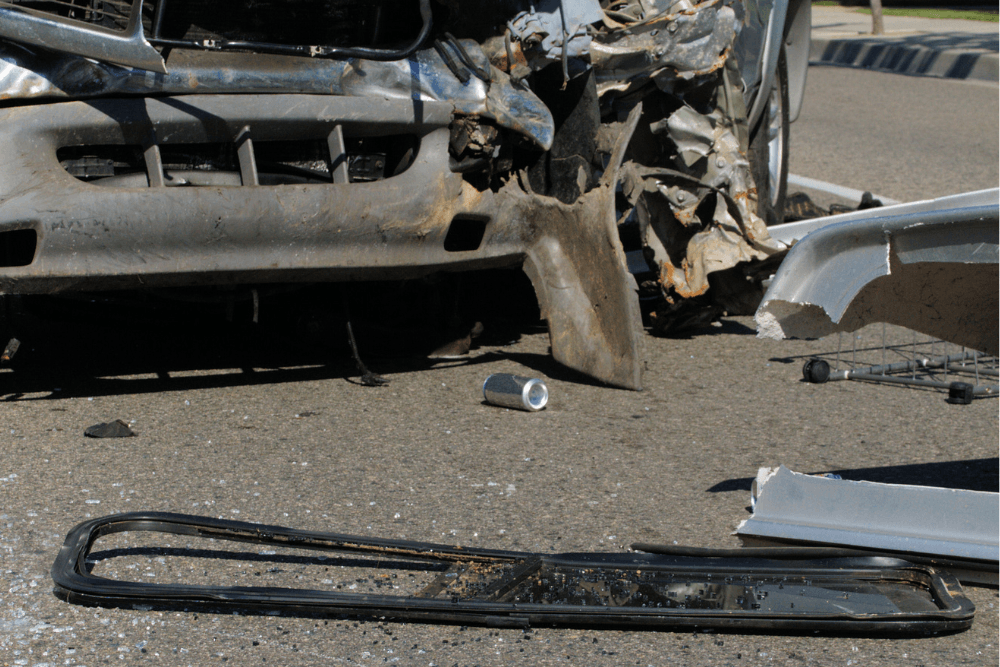
CHP investigators reported that Bautista’s Chevrolet Silverado traveled into the westbound lane and struck the Becerra family’s Toyota Camry head-on.
Emergency crews responded and transported Maria and Ricardo Becerra to the hospital.
Ricardo did not survive his injuries.
Maria suffered major injuries.
Bautista was treated for minor injuries and later arrested.
Initial charges included murder, felony DUI, and gross vehicular manslaughter while intoxicated. A jury later convicted her of gross vehicular manslaughter while intoxicated and other offenses.
At sentencing in September 2026, she received 11 years and eight months in state prison.
Prosecutors also alleged that Bautista had a prior DUI conviction and that her blood alcohol concentration was at least 0.15% at the time of the crash.
That number matters.
California’s legal limit for most adult drivers is 0.08%.
A BAC of 0.15% is nearly twice that threshold.
But numbers alone do not tell the real story.
Ricardo Becerra Was More Than a Name in a Headline
When stories like this make the news, it is easy for everything to become statistics.
One death.
One DUI.
One prison sentence.
One crash.
But Ricardo Becerra was not a statistic.
Reporting after the crash described a man who was deeply loved by his family and community.
His son, Jose, spoke publicly about how much his father still wanted to accomplish. Friends described Ricardo as joyful, friendly, and engaged with the people around him.
Maria Becerra was also seriously injured in the crash, meaning this family did not simply experience a single loss on one night.
They entered a long road of grief, recovery, and change.
That is the side of impaired driving that often disappears once the court case ends.
The headlines move on.
Families do not.
Why This Case Matters to Us at Clear2Drive
I have worked in the DUI and ignition interlock industry for more than 26 years.
During that time, I have worked with thousands of people who made a bad decision involving alcohol and driving.
I believe strongly in second chances.
In fact, second chances are one of the core reasons Clear2Drive exists.
But believing in second chances does not mean minimizing what impaired driving can do.
Both ideas can be true at the same time.
People can make serious mistakes and deserve a path forward.
And we can also acknowledge that some decisions create permanent consequences for other families.
That balance matters.
Our goal has never been to shame people going through the DUI process.
Shame does not make someone safer.
Education, accountability, structure, treatment when appropriate, and technology can.
The Becerra case is a painful reminder of why all of those things matter.
The Particular Danger of Repeat DUI
One detail reported by prosecutors in this case is especially important from the perspective of someone who has spent decades working in this field.
Prosecutors alleged Bautista had a prior DUI conviction.
We do not have enough public information to responsibly describe the details of that prior case, when it occurred, or what requirements applied to her afterward.
But repeat impaired driving is one of the most difficult challenges in DUI prevention.
A first DUI arrest should be an enormous warning.
For some people, it is.
They complete the process, change their habits, and never repeat the behavior.
For others, the underlying behavior continues.
That is where monitoring, treatment, education, and ignition interlock programs can become especially important.
Why Ignition Interlocks Matter
An ignition interlock device is not designed to punish someone.
It is designed to prevent one very specific event:
Starting and operating a vehicle after drinking.
Before the vehicle starts, the driver provides a breath sample.
If alcohol above the device’s preset threshold is detected, the vehicle will not start.
The device also requires additional breath samples while the vehicle is being operated.
There is decades of research behind this technology.
Studies cited by federal public-health and highway-safety agencies have repeatedly found that ignition interlocks substantially reduce repeat impaired-driving behavior while installed.
That is why California requires ignition interlocks for many repeat DUI offenders and for DUI cases involving injury.
Current California law generally requires mandatory IID periods ranging from one to four years for repeat and injury-involved alcohol DUI cases, depending on the driver’s history.
The important point is not the length of the requirement.
It is what happens during that period.
An interlock creates a physical barrier between alcohol consumption and vehicle operation.
And sometimes a physical barrier is exactly what is needed.
Could an Ignition Interlock Have Prevented This Crash?
This is where we need to be careful.
We cannot responsibly say that Bautista was supposed to have an ignition interlock installed at the time of the crash.
The publicly available reporting reviewed for this article does not provide enough detail about her earlier DUI case or her license status to make that claim.
And we should not turn assumptions into facts simply because they support a point we want to make.
What we can say is this:
Ignition interlocks are specifically designed to prevent alcohol-impaired driving by people who are required or choose to use them.
When properly installed and used, a vehicle equipped with an IID generally cannot be started when the driver’s breath alcohol exceeds the programmed threshold.
That is why effective interlock programs matter.
It is also why compliance matters.
Installing the device is only the beginning.
The driver has to actually remain in the program, service the device, follow the rules, and use it consistently.
Technology helps.
But the human part of the program still matters.
What 26 Years in This Industry Has Taught Me
Cases like this remind me why I have always believed ignition interlock programs should be about more than equipment.
We are not installing a machine and sending someone away.
We are dealing with people in the middle of a very consequential period in their lives.
For many clients, a DUI is the first serious legal problem they have ever experienced.
They are scared.
They are embarrassed.
They are worried about their job, their family, and whether they will be able to drive.
That moment creates an opportunity.
We can treat them like a number and collect a payment.
Or we can educate them.
Explain why the device exists.
Help them understand the rules.
Help them complete the program successfully.
And hopefully help make sure there is never another DUI.
That is the part of this industry I care about most.
Accountability Without Shame
At Clear2Drive, one of our core beliefs is accountability without shame.
That phrase matters in a case like this.
Accountability means acknowledging that impaired driving can kill innocent people.
It means recognizing that the consequences can be permanent.
It means taking DUI restrictions, ignition interlock requirements, treatment programs, and license conditions seriously.
But accountability does not require humiliating people.
If someone receives a DUI and wants to change their behavior, the system should help them succeed.
The goal should not simply be completing twelve months with a machine in the car.
The goal should be making sure there is no second victim.
Why BAC Numbers Can Be Misleading to Drivers
Prosecutors alleged a BAC of at least 0.15% in the Bautista case.
One of the things we talk about frequently at Clear2Drive is how poorly many people understand blood alcohol concentration.
People judge themselves based on how they feel.
“I feel fine.”
“I don’t feel drunk.”
“I ate dinner.”
“I waited an hour.”
None of those statements tells you what your BAC actually is.
Alcohol impairment begins before many people recognize it.
Reaction time, judgment, coordination, and decision-making can all be affected before someone personally believes they are impaired.
That is why trying to estimate whether you are “okay to drive” after drinking is such a dangerous calculation.
The safer decision is simple.
If you have been drinking, do not drive.
The cost of a rideshare, taxi, hotel room, or phone call to a friend is insignificant compared with what happened on Gopher Canyon Road.
The Sentence Does Not End the Story
Eleven years and eight months is a significant prison sentence.
But there is no sentence that restores Ricardo Becerra to his family.
There is no number of years that erases Maria’s injuries.
And there is no court order that puts a family back exactly where it was before March 17, 2024.
That is why prevention matters so much.
Criminal penalties happen after the crash.
Ignition interlocks, education, treatment, designated drivers, rideshare services, and responsible planning exist to prevent the crash from happening in the first place.
The best DUI case is the one that never happens.
A Message to Our North County Community
This tragedy happened practically in our backyard.
Bonsall.
Vista.
Valley Center.
These are our roads.
Our neighbors.
Our families.
Many of us have driven Gopher Canyon Road countless times without giving it a second thought.
That is what makes stories like this feel different when they happen close to home.
Ricardo Becerra could have been any husband, father, friend, coworker, or neighbor driving home that night.
Maria could have been any person simply sharing the road with someone who had been drinking.
That is why impaired driving prevention is not somebody else’s issue.
It belongs to all of us.
For anyone currently going through a DUI, my message is not that your life is over.
It isn’t.
A DUI can become a turning point.
You can complete your requirements.
You can make different decisions.
You can rebuild trust.
You can move forward.
But take the process seriously.
The rules surrounding DUI programs, ignition interlocks, SR22 insurance, and restricted licenses are not arbitrary obstacles.
Behind those rules are families like the Becerras.
Final Thoughts
There are articles we write at Clear2Drive because people need answers about DMV paperwork or ignition interlock rules.
This is different.
This one is personal.
Ricardo Becerra lost his life on a road just a short distance from the communities we serve every day.
His wife was seriously injured.
Another person will now spend more than a decade in prison.
Several lives changed permanently in a matter of seconds.
If there is anything worth taking from this story, it is this:
Do not gamble with impaired driving.
If you have already received a DUI, use the experience as the moment where the behavior stops.
If you are required to use an ignition interlock device, understand what it is there to do and take the requirement seriously.
And if you have been drinking and are wondering whether you are okay to drive, you already have your answer.
Find another way home.
Our thoughts are with Ricardo Becerra’s family and everyone affected by this tragedy.
Written by Dan Rhodes, Founder, Clear2Drive, 26-year ignition interlock industry veteran, Advisory council member.
Sources
The Coast News / City News Service
California Highway Patrol reporting
Times of San Diego / City News Service
California Department of Motor Vehicles
California Legislative Information
Centers for Disease Control and Prevention
National Highway Traffic Safety Administration